
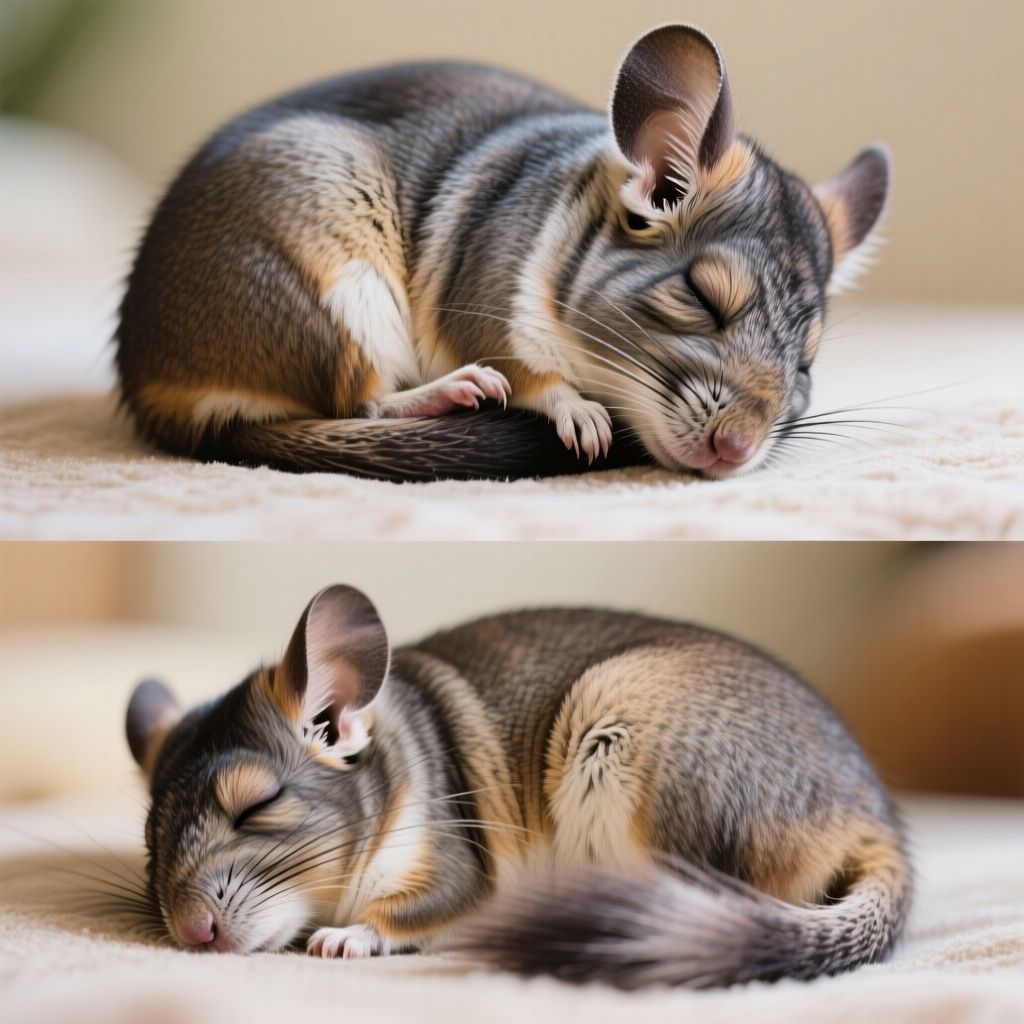
درک چرخههای خواب در چینچیلاها
چینچیلاها، آن موجودات ناز و پشمالوی کوچک، الگوهای خوابی منحصربهفردی دارند که به طور قابل توجهی با الگوی ما متفاوت است. به عنوان صاحب یک چینچیلا، درک چرخههای خواب آنها برای ارائه بهترین مراقبت و اطمینان از رفاهشان حیاتی است. برخلاف انسانها، چینچیلاها حیوانات غروبفعال (crepuscular) هستند، به این معنا که در سحرگاه و غروب بیشترین فعالیت را دارند. این رفتار از زیستگاه طبیعیشان در رشتهکوههای آند در آمریکای جنوبی ناشی میشود، جایی که برای اجتناب از شکارچیان، در ساعات کمنور فعال شدهاند. بیایید به جزئیات چرخههای خوابشان بپردازیم و ببینیم چگونه میتوانید ریتم طبیعیشان را حمایت کنید.
طبیعت غروبفعال چینچیلاها
چینچیلاها معمولاً در طول روز و شب میخوابند و در اوایل صبح و اواخر عصر برای بازی، خوردن و کاوش بیدار میشوند. به طور متوسط، آنها حدود ۱۲ تا ۱۵ ساعت در روز میخوابند، اغلب در چرتهای کوتاه به جای یک خواب طولانی مداوم. این چرتها میتواند از چند دقیقه تا چند ساعت طول بکشد. ممکن است ببینید چینچیلایتان در گوشهای دنج از قفس پیچیده شده یا در جعبه لانه پنهان شده است—این کاملاً طبیعی است! خواب آنها به عمق خواب ما نیست، بنابراین اگر خطر حس کنند یا صدای بلندی بشنوند، سریع بیدار میشوند.
به دلیل طبیعت غروبفعالشان، چینچیلاها ممکن است در زمانهایی که شما بیدار هستید کمتر فعال به نظر برسند. اگر در حال آماده شدن برای تعامل با آنها خوابیده باشند، نگران نشوید؛ فقط یعنی ساعت داخلیشان روی برنامه متفاوتی کار میکند. مشاهده دورههای فعالشان در سحرگاه یا غروب میتواند راهی لذتبخش برای برقراری ارتباط با آنها باشد.
ایجاد محیط مناسب برای خواب
برای حمایت از چرخه خواب طبیعی چینچیلایتان، ایجاد محیطی آرام و راحت مهم است. در اینجا چند نکته عملی برای کمک آورده شده:
- آرامش در طول روز: از آنجایی که چینچیلاها بیشتر روز را میخوابند، سعی کنید محل زندگیشان را در بخش آرامی از خانه نگه دارید. قفسشان را نزدیک وسایل پرسر و صدا، مناطق شلوغ خانواده یا پنجرههایی با ترافیک صوتی سنگین قرار ندهید. اگر ممکن نیست، بخشی از قفس را با پتویی سبک و قابل تنفس بپوشانید تا صداها را کم کند و نور را ملایم کند.
- تاریکی برای استراحت: چینچیلاها در زمان خواب نور ملایم را ترجیح میدهند. آنها به تاریکی کامل نیاز ندارند، اما از نور مستقیم خورشید یا چراغهای مصنوعی شدید نزدیک قفس در طول روز اجتناب کنید. در شب، مطمئن شوید فضایشان در معرض نورهای ناگهانی قرار نگیرد، زیرا این میتواند استراحتشان را مختل کند.
- بستر راحت: بستر نرم و ایمن یا مخفیگاهی فراهم کنید که در آن هنگام خواب احساس امنیت کنند. مخفیگاههای چوبی یا لانههای پوشیده با فليس گزینههای عالی هستند. مطمئن شوید بستر را مرتب تمیز کنید تا بهداشتی و دنج بماند.
- دمای پایدار: چینچیلاها به گرما حساس هستند و دماهای بالای ۷۵°F (۲۴°C) میتواند آنها را تحت فشار قرار دهد و خواب راحت را سخت کند. محیط را بین ۶۰-۷۰°F (۱۶-۲۱°C) نگه دارید تا خواب آرامتری داشته باشند.
تطبیق با برنامه آنها
به عنوان صاحب چینچیلا، ممکن است نیاز باشد زمانهای تعاملتان را با دورههای فعال آنها هماهنگ کنید. سعی کنید در اوایل صبح یا اواخر عصر که به طور طبیعی بیدار و پر انرژی هستند با حیوان خانگیتان وقت بگذرانید. این بهترین زمان برای بازی، غذا دادن یا دست زدن است. اگر برنامه شما با آنها همخوانی ندارد، صبور باشید—چینچیلاها گاهی با تعامل مداوم و ملایم میتوانند کمی با روتین شما تطبیق پیدا کنند.
از بیدار کردن چینچیلا در زمان خوابشان مگر در موارد کاملاً ضروری اجتناب کنید، زیرا این میتواند استرس ایجاد کند و سلامتشان را مختل کند. اگر متوجه شدید چینچیلایتان بیش از حد معمول (بیش از ۱۵ ساعت روزانه) میخوابد یا در زمانهای فعال بیحال به نظر میرسد، ممکن است نشانه بیماری یا استرس باشد. در چنین مواردی، با دامپزشکی که متخصص حیوانات اگزوتیک است مشورت کنید.
چرا خواب برای سلامت چینچیلا مهم است
خواب مناسب برای سلامت جسمی و روانی چینچیلایتان حیاتی است. کمبود استراحت میتواند منجر به استرس، ضعف سیستم ایمنی و مشکلات رفتاری مانند تحریکپذیری یا بیشازحد تمیز کردن شود. با احترام به چرخههای خواب طبیعیشان و فراهم کردن محیط حمایتی، به آنها کمک میکنید تا شکوفا شوند. به یاد داشته باشید، یک چینچیلای خوب استراحتکرده، چینچیلای شادی است که آماده پریدن و آوردن شادی به خانهتان در ساعات فعالش است.
درک و تطبیق با الگوهای خواب چینچیلایتان راهی ساده اما تأثیرگذار برای نشان دادن عشق به آنهاست. با کمی مشاهده و مراقبت،很快 با ریتم منحصربهفردشان آشنا میشوید و پیوند قویتری با دوست پشمالویتان برقرار میکنید.