Introduction to Modern Breed Types in Chinchillas
Chinchillas, those adorable, fluffy rodents native to the Andes Mountains of South America, have captured the hearts of pet owners worldwide. While chinchillas were originally bred for their fur in the early 20th century, selective breeding has since evolved to focus on temperament, health, and unique color mutations for the pet trade. Today, modern breed types—often referred to as color mutations or varieties—offer a fascinating array of appearances while maintaining the core characteristics of the species. This article explores the history, taxonomy, and diversity of modern chinchilla breed types, providing pet owners with insights and practical tips for understanding and caring for these delightful companions.
Historical Context of Chinchilla Breeding
Chinchillas were first domesticated in the 1920s when American miner M.F. Chapman brought 11 wild chinchillas to California to start a fur farming industry. At that time, only the standard gray (or agouti) chinchilla existed in captivity, mirroring their wild counterparts. Over decades, breeders began noticing natural mutations in fur color and worked to develop these traits through selective breeding. By the mid-20th century, distinct color varieties emerged, marking the beginning of modern breed types. Today, organizations like the Empress Chinchilla Breeders Cooperative (ECBC) and the Mutation Chinchilla Breeders Association (MCBA) in the United States set standards for these varieties, ensuring ethical breeding practices and healthy genetics. Understanding this history helps pet owners appreciate the diversity of chinchillas and the importance of responsible breeding to avoid health issues tied to overbreeding certain mutations.
Common Modern Breed Types
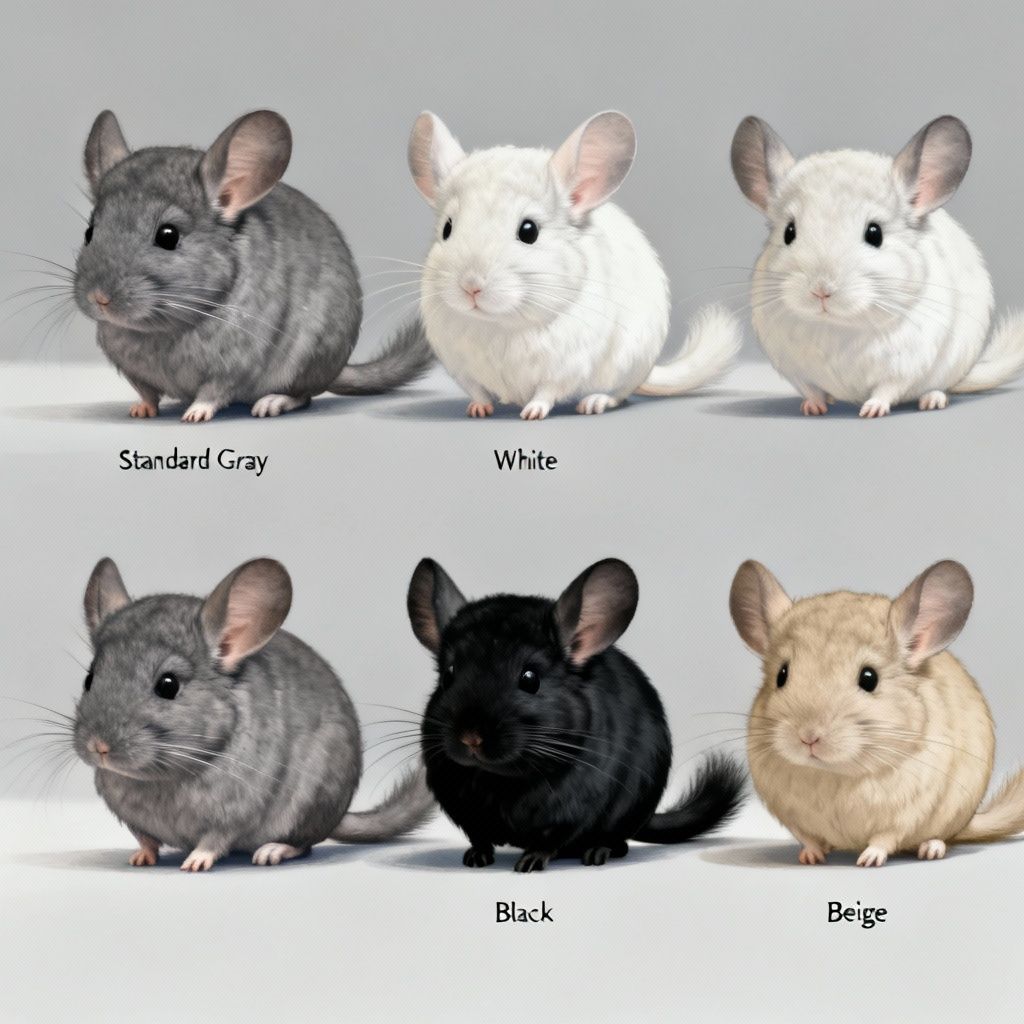
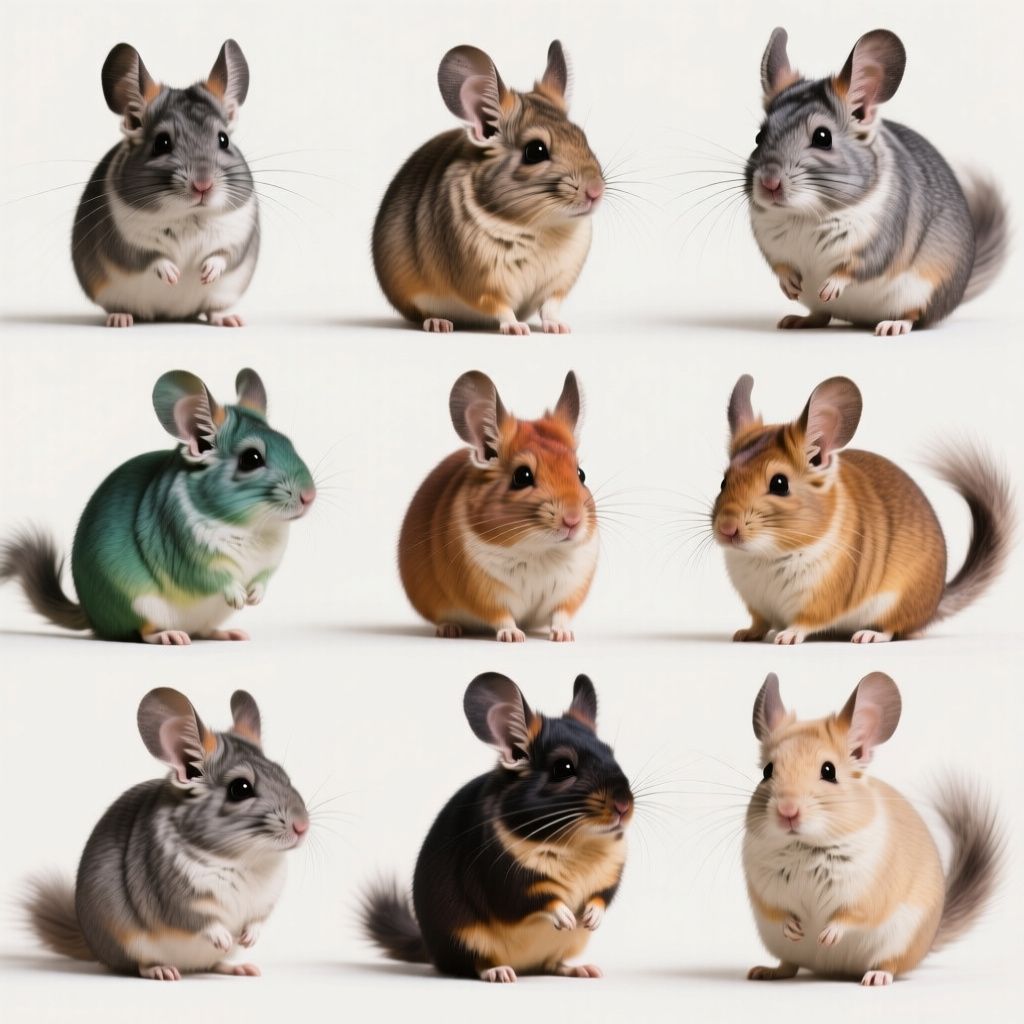
Modern chinchilla breed types are primarily defined by their coat color and pattern, resulting from genetic mutations. Here are some of the most popular varieties recognized today:
- Standard Gray (Agouti): The original wild-type chinchilla, with a dark gray coat and a white underbelly. This type is hardy and often recommended for first-time owners due to its robust genetics.
- Beige: A warm, creamy-brown color, first documented in the 1950s. Beige chinchillas can be homozygous (lighter) or heterozygous (darker), and they often have a friendly demeanor.
- Black Velvet (Touch of Velvet): Known for their striking dark black coat with a velvety sheen and white belly, this mutation appeared in the 1960s. They require careful breeding to avoid the lethal factor—a genetic issue where two velvet genes result in non-viable offspring.
- White (Wilson White, Mosaic, Silver): A stunning variety with white fur, often mixed with gray markings in mosaics. First bred in the 1950s, whites need extra attention to coat cleanliness due to their light fur.
- Sapphire: A rare mutation with a bluish-gray tint, developed in the 1960s. Sapphires are prone to specific health concerns like smaller litter sizes, so owners should source them from reputable breeders.
- Violet: Featuring a soft, purplish-gray hue, this type emerged in the 1970s. Violets are visually striking but can be more sensitive to temperature changes.
Practical Tips for Pet Owners
Understanding your chinchilla’s breed type can help tailor their care. Here are some actionable tips for owners:
- Research Your Chinchilla’s Genetics: Knowing whether your pet is a standard gray or a rare mutation like sapphire can guide you in anticipating health needs. For example, velvets and sapphires may require more vigilant monitoring for genetic issues. Ask your breeder for a pedigree if possible.
- Grooming by Color: Light-colored chinchillas like whites need more frequent dust baths (2-3 times a week) with high-quality chinchilla dust to prevent fur staining. Darker varieties like black velvets may show dust residue more visibly, so keep their bathing area clean.
- Temperature Sensitivity: Mutations like violets can be more sensitive to heat. Maintain a cool environment (60-70°F or 15-21°C) and avoid placing cages near windows or heaters, regardless of breed type.
- Avoid Breeding Without Expertise: Due to lethal factors (e.g., in velvets and whites), casual breeding can harm chinchillas. If you’re curious about breeding, consult with a vet or join a breeders’ association for guidance.
- Adopt Responsibly: With over 100,000 chinchillas in the pet trade annually, opt for adoption from rescues or reputable breeders to ensure you’re not supporting unethical practices that overbreed rare mutations.
Conclusion
Modern breed types in chinchillas showcase the incredible diversity within this small species, from the classic standard gray to the mesmerizing sapphire and violet mutations. Each type carries a piece of history and selective breeding efforts that have shaped the chinchillas we know today as pets. By understanding the origins and characteristics of these varieties, pet owners can better care for their furry friends, ensuring they thrive in a loving home. Whether you’re drawn to the elegance of a black velvet or the simplicity of a standard gray, every chinchilla deserves informed, attentive care tailored to their unique needs.